

|
Getting your Trinity Audio player ready...
|
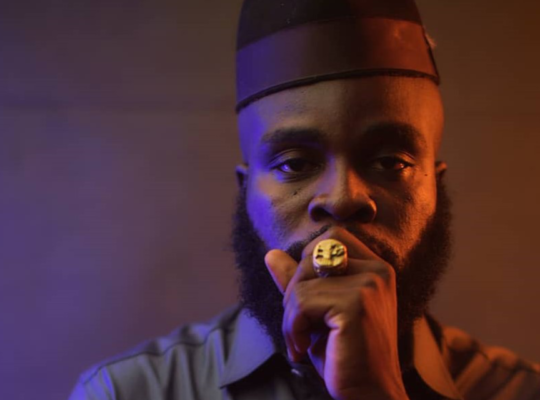
There are artists who introduce themselves loudly, and then there are artists who simply start working until you have no choice but to notice. Bogo Blay belongs firmly in the second group. No unnecessary noise, no desperate reinvention. Just a steady rise built on clarity, culture, and a refusal to sound like anyone else.
If his name is already familiar, that is by design. If it is not, then consider this less of an introduction and more of an overdue briefing.
The First Statement: “ZAM” Sets the Tone
Every artist has a moment when intention becomes audible. Not the early freestyles or competition wins, but the first official release that draws a line in the sand.
For Bogo Blay, that moment arrived with “ZAM” in 2020. It was not a dramatic entrance. No oversized campaign, no exaggerated rollout. Just a track that did exactly what it needed to do. It introduced him with precision.
“ZAM” made two things clear almost immediately. He could rap, and he understood his sound. That second part is where many artists stumble. Bogo Blay did not.
Rather than chase what was already popular, he leaned into identity. The choice was subtle at the time, but it would go on to define everything that followed.
Holding the Line for Authentic Sound
Since stepping into the scene in 2019 after winning the Vodafone Icons “Rep Ur Hood” edition, Bogo Blay has moved with unusual discipline.
While many artists experiment themselves into confusion, he has remained grounded in an authentic Ghanaian sound. This is not nostalgia dressed up as artistry. It is a calculated commitment.
His music carries the unmistakable texture of 2000s Hiplife. The cadence is measured. The pride in culture is obvious. His transitions between rap and ragga feel natural, the way they did when the sound first found its footing.
It feels familiar, but not dated. That distinction matters.
Each release reinforces a simple argument. This sound has not expired. It has been waiting. Give it intention and it responds.
From “ZAM” to “Jango” and “Zoom”
After “ZAM,” there was no pause for effect. Bogo Blay kept moving.
Tracks like “Jango” and “Zoom” followed, each one expanding his reach while tightening his identity. There was no sudden shift in direction, no attempt to reintroduce himself with every release. Instead, there was progression.
That kind of pacing is rare. It requires patience, and more importantly, self-awareness.
Not every song needs to dominate the charts. Some songs exist to build structure. Bogo Blay approached his catalog with that understanding early on.
By the time the wider audience started paying attention, he had already laid the groundwork.
“Medicine” and the Power of Purpose
Then came “Medicine” in 2019, a record that carried more than rhythm.
A song centered on drug abuse awareness is not the easiest path to visibility. It does not lend itself to quick trends or effortless virality. Yet “Medicine” managed to cut through.
It spread across TikTok with surprising speed, connecting with listeners who are often dismissed as uninterested in substance. The reaction was a reminder that audiences are not the problem. Delivery is.
The song resonated beyond the numbers. It sparked conversations and extended its reach into real-world impact. Ghana’s Food and Drugs Authority took notice and brought him in as a featured voice for their official anti-drug campaign soundtrack.
That moment added weight to his catalog. It showed that his music could carry responsibility without losing appeal.
Before the Spotlight: A Pattern of Winning
Before the releases and recognition, there was a foundation that made all of this possible.
Born Bogo Blay Labran David on June 23, 1994, in Goaso, his early years already hinted at what was coming. At Bright Star Preparatory and later Jachie Pramso SHS, he was not just participating. He was commanding attention.
Every performance came with a reaction. Not polite applause, but the kind that confirms presence. He picked up titles like Best Rapper and Best Stage Performer with consistency that made it clear this was not temporary.
After SHS, he moved to Tema, a city known for testing artists rather than accommodating them. It is a place where reputation is earned in real time.
He earned his.
Competitions became checkpoints. “Kasahare Level,” “YFM Hitmaker Radio Edition,” “Kill The Beat,” “Genesis Radio Street Battle.” Each one ended the same way.
A win.
By the time he entered Vodafone Icons Street Edition, the result felt almost inevitable. He won again.
At that stage, it stopped looking like coincidence and started looking like structure.
Stages, Spotlights, and Standing Firm
Moving from competitions to major stages often exposes gaps. Bogo Blay transitioned without visible strain.
From Detty Rave to December To Remember, from Saminifest to the Accra Music Festival, he has built a reputation as a performer who understands scale. The energy translates. The presence holds.
He has shared stages with names like Samini, Stonebwoy, Shatta Wale, Mr Eazi, KiDi, Kuami Eugene, and Kwesi Arthur.
Sharing space with artists of that caliber can be intimidating. Looking out of place is easy. Bogo Blay avoids both.
The Bigger Picture: Building, Not Chasing
There is a noticeable difference between artists who chase attention and those who build something durable.
Bogo Blay is building.
From “ZAM” through to “Medicine” and beyond, his career shows a pattern of intention. The releases are measured. The identity is consistent. The growth is gradual.
No rushed pivots. No panic decisions.
In an industry that often rewards volume over value, he has chosen clarity over noise.
He is not trying to fit into every conversation. He is shaping his own lane and allowing the audience to find it.
Still Unfolding
What makes his journey compelling is that it still feels in motion.
There is no sense of completion. No indication that he has reached a final form. Just steady progress and increasing precision.
If the path from “ZAM” to now is any indication, the next phase will not rely on volume or spectacle. It will rely on refinement.
Bogo Blay is not here to revisit the past for sentiment.
He is here to prove that the foundation still holds.