
|
Getting your Trinity Audio player ready...
|
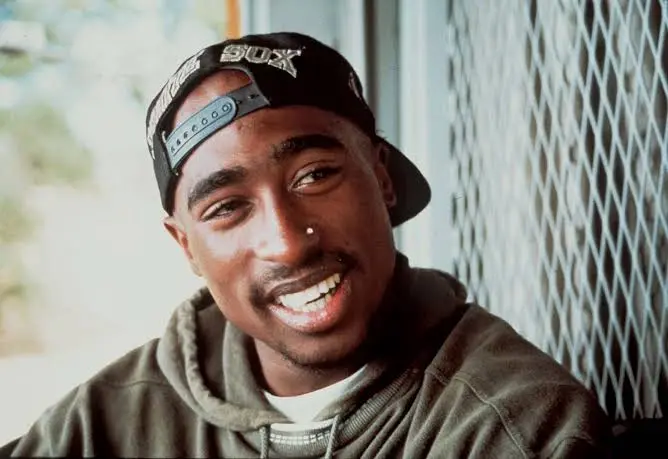
Thirty years after the shocking murder of hip-hop icon Tupac Shakur, a case that has fascinated the world for decades has finally reached the courtroom.
The long-awaited trial of Duane “Keffe D” Davis, the man accused of orchestrating Tupac’s killing, began in Las Vegas on Monday with jury selection. Davis, a former leader of the South Side Compton Crips, is facing charges linked to the 1996 drive-by shooting that claimed the rapper’s life.
Prosecutors allege that Davis ordered the attack and supplied the firearm used in the shooting. If convicted, the 63-year-old could face life imprisonment without the possibility of parole.
The trial is expected to last about a month. However, prosecutors face a significant challenge: proving who actually pulled the trigger on the night Tupac was killed.
The Night Everything Changed
Tupac was just 25 when he travelled to Las Vegas to watch heavyweight boxing champion Mike Tyson fight at the MGM Grand on September 7, 1996.
What began as a night of entertainment quickly turned into a deadly confrontation.
According to prosecutors, Tupac and Death Row Records boss Marion “Suge” Knight became involved in a physical altercation with Orlando “Baby Lane” Anderson, Davis’ nephew and a member of the South Side Compton Crips, following the boxing match.
Authorities believe that confrontation set the stage for a revenge attack later that night.
As Tupac and Knight travelled through Las Vegas in a BMW, a white Cadillac reportedly pulled alongside their vehicle. Davis, Anderson and other men were inside.
Gunfire erupted.
Tupac was struck multiple times and critically wounded. He was rushed to hospital but died six days later, leaving behind a musical legacy that would grow even larger after his death.
A Cold Case Refuses to Stay Cold
For decades, Tupac’s murder remained one of the most notorious unsolved cases in American music history.
The mystery generated endless theories, documentaries and debates among fans, investigators and hip-hop insiders. The question remained painfully simple: Who killed Tupac Shakur?
The case gained renewed momentum following the publication of Davis’ memoir in 2019.
In the book, Davis acknowledged that he was sitting in the front passenger seat of the Cadillac during the shooting. He also said he obtained a firearm and handed it to people in the back of the vehicle.
However, he did not identify the person who allegedly fired the fatal shots.
His statements in the memoir, combined with comments he had made publicly over the years, eventually drew renewed attention from investigators.
In September 2023, Davis was arrested and charged in connection with Tupac’s killing.
Davis Maintains His Innocence
Davis has pleaded not guilty and continues to deny killing Tupac.
In a 2025 interview with ABC News, he denied involvement in the rapper’s death and argued that authorities did not have evidence placing him in Las Vegas on the night of the shooting.
He has also attempted to distance himself from portions of his memoir, claiming that his co-author exaggerated elements of his story to increase book sales.
That defence will now be tested in court.
A Legacy That Refuses to Fade
Tupac Amaru Shakur’s influence extends far beyond the circumstances of his death.
As one of the defining voices of 1990s hip-hop, Tupac used songs such as California Love and All Eyez on Me to explore fame, poverty, violence, love, ambition and life in America.
His death also became inseparable from the infamous East Coast and West Coast rivalry that dominated hip-hop during the 1990s.
At the centre of that feud were Death Row Records, led by Suge Knight, and Bad Boy Records, founded by Sean “Diddy” Combs. The rivalry became even darker following the murder of The Notorious B.I.G. in Los Angeles in March 1997, just months after Tupac’s death.
Three decades later, both murders remain deeply embedded in hip-hop history.
The Questions Still Hanging
For Tupac’s family, the trial represents more than another chapter in a decades-old investigation. It is an opportunity to finally confront the unanswered questions surrounding the rapper’s death.
In May, Tupac’s stepbrother, Maurice Shakur, filed a wrongful-death lawsuit, arguing that individuals allegedly connected to the killing had gone three decades without being held accountable.
Now, with Davis finally before a jury, the world is watching.
The trial may provide long-awaited answers. It may also leave some of the biggest questions untouched, particularly if prosecutors cannot establish who fired the fatal shots.
Either way, after 30 years of theories, rumours and unanswered questions, Tupac’s murder is finally being debated where evidence matters most: inside a courtroom.
For one of hip-hop’s most influential stars, the search for answers has entered a new and potentially historic chapter.