
|
Getting your Trinity Audio player ready...
|
Ghanaian entertainment is having a fascinating moment.
The stars are shining. The music is crossing borders. Concerts are getting bigger. The film industry is chasing a comeback. Comedy is expanding faster than waakye joints on a busy Accra morning.
In the middle of all this excitement, government has pledged GH¢20 million for film and another GH¢20 million for the wider creative arts sector.
Clearly, something is moving.
But once the champagne is finished, the selfies are posted and the Instagram captions have done their job, one slightly inconvenient question remains:
Are we building an entertainment industry, or are we simply producing celebrities?
Those are not the same thing.
Ghana Has Stars. Plenty of Them.
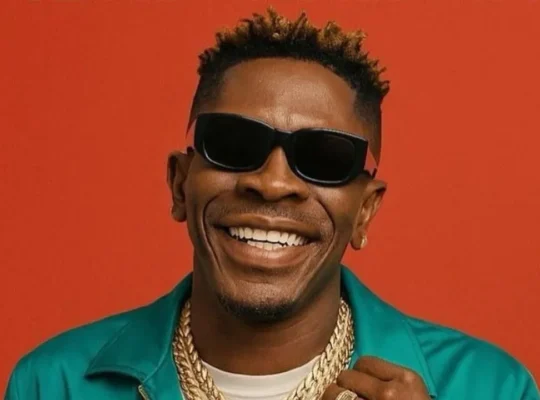
Stonebwoy can headline major venues in London. Shatta Wale can attract crowds large enough to test the patience of security personnel and traffic officers alike. Ghanaian music continues to win fans far beyond our borders.
That is worth celebrating.
Still, international visibility is not the same as having an international industry.
When one Ghanaian artiste breaks through globally, we celebrate the artiste. Fair enough.
But what happens to the manager?
The producer?
The songwriter?
The sound engineer?
The lighting company?
The event organiser?
The booking agent?
The music publisher?
The merchandise business?
The entertainment lawyer?
That is where the real conversation begins.
One superstar is a success story.
An ecosystem creating thousands of sustainable creative careers is an economy.
Ghana should be aiming for the second.
Follow the Money
Nothing exposes the maturity of an entertainment industry quite like money.
Forget the awards, the red carpets and the fashion statements.
Follow the money.
Who owns the music?
Who earns when songs are streamed, played on radio or licensed for commercial use?
More importantly, does anyone actually know what they are owed?
There are encouraging signs.
GHAMRO recently announced that it distributed GH¢1.43 million in July 2026 across background, digital, live and mechanical rights. The highest individual recipient is expected to receive GH¢121,000. Even better, beneficiaries received personalised statements explaining exactly where their earnings came from.
That is progress.
For years, conversations about royalties in Ghana sounded like a never-ending radio phone-in. Everyone had an opinion, but nobody seemed to have the figures.
Now the numbers are finally doing the talking.
Unlike rumours, they can be audited.
GHAMRO also reports its strongest digital and international collections since 2011.
Excellent news.
It also prompts another question.
If this is what we are collecting today, how much more revenue is still slipping through the cracks?
Film Finally Gets Some Fuel
Film has its own interesting chapter.
Government has allocated GH¢20 million as seed funding for the Film Development Fund, alongside another GH¢20 million for the broader Creative Arts Fund.
The National Film Authority has opened applications covering production, script development, distribution, cinema infrastructure, training, research and international co-productions. Successful applicants can receive up to 60 percent of eligible project costs, and GH¢5 million has already been released from the film allocation.
That is serious investment.
Money, however, has two possible careers.
It can build an industry.
Or it can finance a very expensive group photograph.
The important question is not simply how much funding filmmakers receive.
The real question is what that funding produces.
Even more importantly, how those productions continue making money long after the premiere.
Ghana does not need another film that enjoys a glamorous Friday launch and becomes yesterday’s WhatsApp status by Sunday afternoon.
We need films with distribution.
We need cinemas.
We need streaming partnerships.
We need export markets.
We need stronger intellectual property protection.
We need investors who see film as a business rather than an act of generosity.
The ShattaFest Lesson
Then there is the delicate matter of live events.
The recent ShattaFest UK controversy, which raised concerns about overcrowding and safety, has highlighted an important issue.
As Ghanaian stars attract increasingly larger audiences, can the machinery supporting them keep pace?
Public safety should never become another round of celebrity rivalry.
Instead, the incident should encourage serious reflection on event management standards.
A concert is not successful simply because the flyer proudly announces “SOLD OUT.”
If 20,000 people arrive and nobody has a clear plan for crowd control, ticket verification, emergency exits or venue capacity, that is not a triumph.
It is the opening scene of a documentary nobody wants to watch.
As Ghanaian stars grow bigger, the systems around them must grow even faster.
We Love the Headlines
This is where Ghana deserves a little affectionate teasing.
We are world-class at making announcements.
“The biggest concert ever.”
“A historic night.”
“International superstar.”
“Unprecedented.”
“Sold out.”
Judging by social media, almost every Thursday evening in Accra qualifies as the greatest entertainment event since somebody first discovered electricity.
Unfortunately, industries are not built on adjectives.
They are built on systems.
A healthy entertainment economy should function like a well-run machine.
Talent discovery.
Talent development.
Financing.
Production.
Rights management.
Marketing.
Distribution.
Monetisation.
Export.
Reinvestment.
Ghana already has gifted people working in each of these areas.
What we need is a stronger machine connecting all of them.
From Stars to Systems
The true measure of Ghana’s entertainment future is not whether we can produce another superstar.
We already know we can.
The real test is whether every superstar creates an ecosystem around their success.
Imagine every major Ghanaian artiste supporting a professional management company employing dozens of people.
Imagine every successful film creating jobs that extend well beyond the cast.
Imagine Ghanaian music exports also taking producers, sound engineers, choreographers, fashion designers and event companies to international markets.
Imagine if the income from a hit song did not disappear into the mysterious Bermuda Triangle of Ghanaian entertainment finance.
That is when we stop calling it showbiz and start calling it an industry.
So What Should Ghana Do?
First, professionalise the business.
Contracts, accounting, publishing, licensing, royalty collection and intellectual property management should become standard practice rather than optional extras.
Second, ensure public funding is transparent and measurable.
GH¢20 million should produce more than premieres and press conferences.
We should be able to point to the jobs, films, businesses and revenues it creates.
Third, build exportable creative companies, not just exportable artistes.
Ghana should be selling production expertise, artist management, event services, music, film, fashion and other creative solutions to the world.
Fourth, strengthen event safety standards.
Bigger stars deserve bigger systems.
Finally, redefine success.
A superstar is wonderful.
A superstar whose success supports 500 people earning sustainable incomes is even better.
Ghana does not have a talent shortage.
If anything, we have talent overflowing in every direction.
The next challenge is transforming that talent into an organised, profitable and resilient creative economy.
Perhaps the most important entertainment question in Ghana today is not, “Who is our biggest star?”
We already have plenty of candidates.
The better question is, “When will our industry become as big as our stars?”
Now that is a conversation worth having.
Ideally on radio.
Ideally with plenty of passion.
And ideally before someone announces yet another “biggest concert in Africa.”