
|
Getting your Trinity Audio player ready...
|
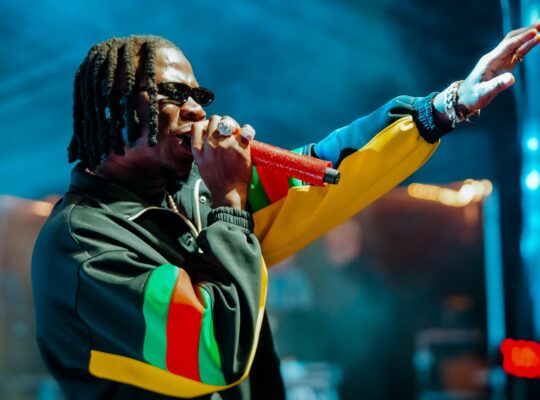
When an artist sells out London’s 12,500 capacity OVO Arena Wembley, there is a perfectly reasonable temptation to keep things simple. Put on the designer outfit, grab the microphone, turn up the lights and let the crowd do the rest.
Stonebwoy had other plans.
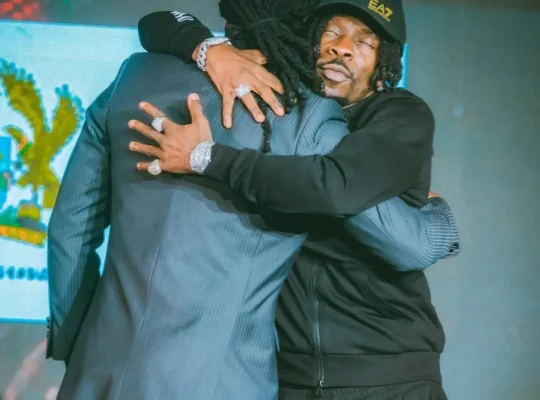
The Ghanaian dancehall powerhouse transformed his historic UK concert into something far more ambitious than a night of music. His BHIM Festival performance became a visual journey through Ghanaian history, identity and cultural pride, with every major element of the production carrying a story of its own.
This was not just a concert.
It was Ghanaian history taking centre stage in London.
The Independence Arch
Before Stonebwoy even appeared, the stage was already telling a story.
Giant LED screens showed the musician on horseback, proudly waving the Ghanaian flag. Then, as the opening sounds of his hit song “Manodzi” filled the arena, Stonebwoy emerged beneath a striking replica of Accra’s iconic Independence Arch.
The structure featured the historic inscriptions “AD 1957” and “Freedom and Justice,” instantly connecting the spectacle in London to Ghana’s journey to independence.
The symbolism was difficult to miss.
The arch transformed the stage into a visual reminder of Ghana’s history and the generations who fought for self-determination. Stonebwoy’s appearance beneath it suggested that the pursuit of freedom did not end with independence. It continues through the creativity, ambition and global achievements of modern Africans.
The Blazing Black Star
Above the arch sat another unmistakable Ghanaian symbol: a giant Black Star engulfed in flames.
It would have been easy to dismiss the fiery display as another impressive piece of concert production. But within the context of the performance, the symbol carried considerably more weight.
The Black Star has long represented Ghanaian identity, independence and African pride. Its fiery presentation added another layer, evoking sacrifice, resilience and the determination required to build a nation.
At Wembley, the symbol took on a new setting and meaning.
It was a reminder that Ghanaian identity can travel far beyond its borders and still command attention on one of the world’s biggest stages.
Cowries and the Language of Wealth
Stonebwoy’s fashion choices also carried a message.
Cowrie shells were incorporated into his outfit and accessories, offering a subtle but powerful reference to Africa’s economic history.
Long before modern currencies became the standard medium of exchange, cowries were widely used as currency in parts of West Africa. They became symbols of wealth, trade and social value.
By incorporating them into his appearance, Stonebwoy turned fashion into cultural storytelling.
The message was stylish but significant. African wealth and identity did not begin with foreign currencies or colonial economic systems. The continent had its own traditions, systems and symbols of prosperity long before modern global markets took shape.
The Staff of Authority
Then came the ceremonial staff.
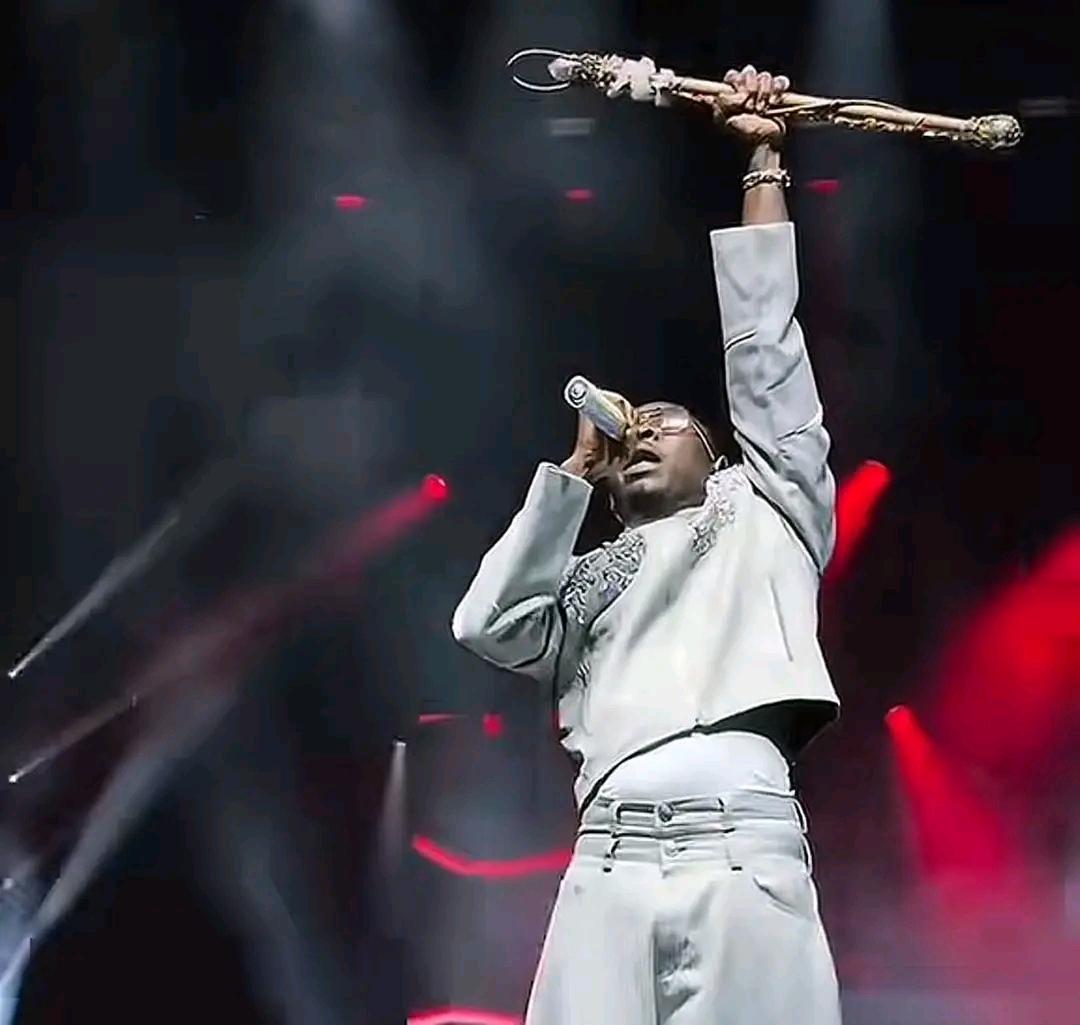
During the performance, Stonebwoy raised a cowrie-adorned rod above his head before lowering his head in a moment of apparent reverence.
The object carried the visual language of authority, leadership and tradition. Its presence added another dimension to the performance, positioning Stonebwoy not simply as an entertainer but as someone conscious of the cultural responsibility that comes with representing Ghana on a global platform.
With thousands of fans watching, the gesture felt less like stage choreography and more like a symbolic acknowledgment of the history behind the spectacle.
A Concert With a Message
Stonebwoy’s BHIM Festival night at Wembley demonstrated what happens when music, fashion, history and theatre are allowed to speak the same language.
The Independence Arch told the story of freedom. The flaming Black Star represented resilience and national identity. The cowries recalled an African history of wealth and trade. The ceremonial staff spoke to leadership and cultural responsibility.
Together, they turned the stage into something resembling a moving museum, except this museum had bass, lights, thousands of screaming fans and Stonebwoy at the centre of it all.
For one night in London, Ghanaian history was not confined to textbooks or monuments.
It was singing, dancing and commanding the stage at Wembley.