
|
Getting your Trinity Audio player ready...
|
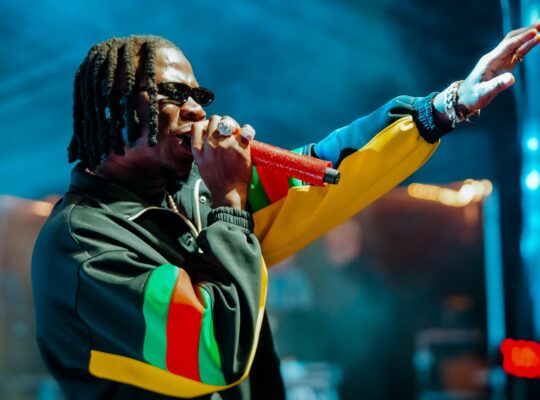
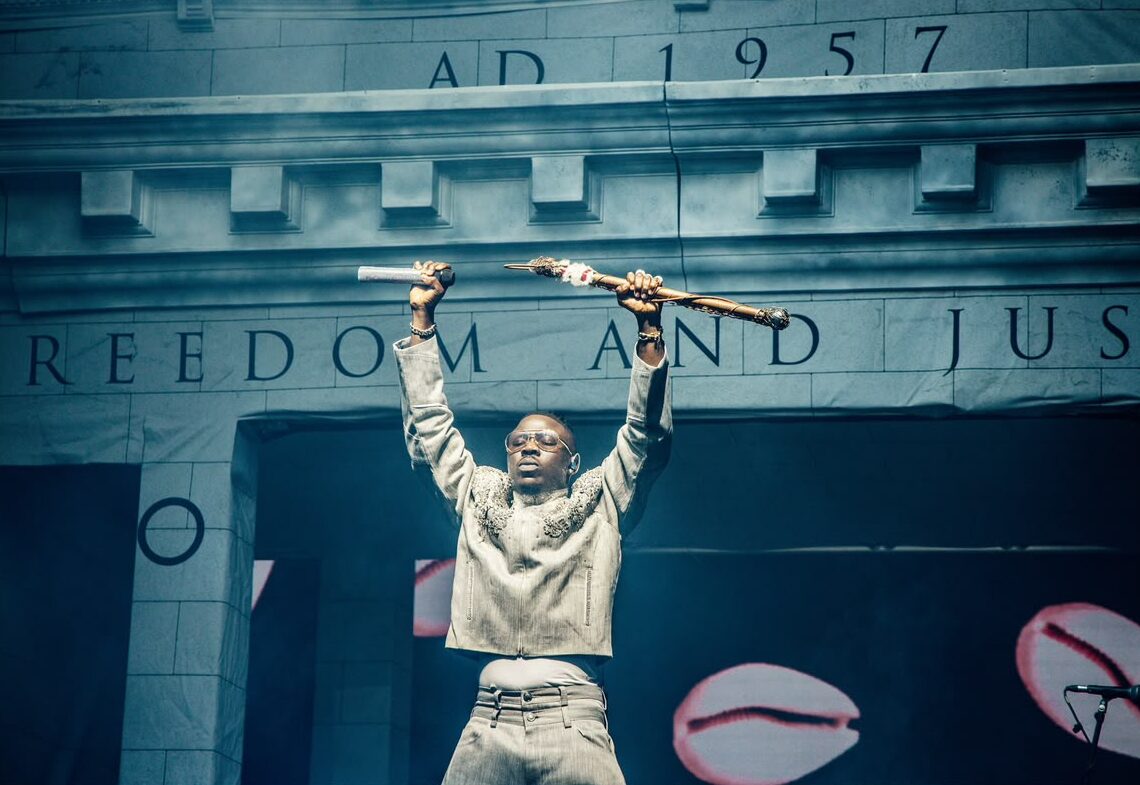
The scene was nothing short of cinematic. A blazing Black Star lit up the massive screens, cowrie shells appeared throughout the visuals, a regal ceremonial staff commanded attention, and Ghana’s iconic Independence Arch stood proudly in the background as Stonebwoy made his entrance before a roaring London crowd.
At first glance, it looked like another blockbuster concert production. Look a little closer, however, and the entrance revealed something much deeper.
As reported by Ghana Weekend, the visuals were carefully designed to tell a story about culture, freedom, identity and Ghana’s growing presence on the global stage.
Stonebwoy was already making history by becoming the first Ghanaian artist to headline the 12,500-capacity OVO Arena Wembley. So, rather than simply walking onto the stage, he decided to make history walk with him.
The Independence Arch became the centrepiece of the spectacle.
Complete with its famous inscriptions, “AD 1957” and “Freedom and Justice,” the landmark transported a familiar piece of Accra straight into the heart of London.
But Stonebwoy did something particularly striking. He did not simply stand beside the Arch. He walked through it.
That single movement carried plenty of meaning. It represented a journey from Ghana’s past into its future, with a post-independence generation taking the freedom inherited from its forefathers into international spaces.
Then came the fire.
The Black Star burned brightly beside the Arch, turning Ghana’s national symbol into a visual statement of resilience, sacrifice and ambition. It spoke to a people who fought for the right to determine their own destiny and a new generation determined to keep pushing that destiny forward.
And then there were the cowries.
They were everywhere, and certainly not there just because somebody thought they looked good on a giant LED screen.
The cowrie shells appeared on Stonebwoy’s outfit, his ceremonial staff and the surrounding digital scenery. Historically associated with currency, wealth, spirituality and social status, they connected the performance to Africa’s rich cultural past.
Stonebwoy was not simply walking out as a musician. He was walking out carrying his roots.
The ceremonial staff added another fascinating layer.
Its commanding design suggested authority, leadership and liberation, echoing the biblical story of Moses leading an oppressed people toward freedom. By incorporating African cowrie motifs into the staff, the production gave that familiar story a distinctly African interpretation.
In other words, Moses got an African remix.
The entire entrance was staged like theatre.
The arena fell into darkness. Shadowy cowrie patterns began to appear. The Independence Arch slowly emerged. The words “AD 1957” and “Freedom and Justice” came into view. Then the Black Star burst into flames, the ceremonial staff appeared, and finally, Stonebwoy walked through the digital Arch.
Before the crowd saw the superstar, they saw the story.
And that was perhaps the most powerful part of the entire production.
The London setting made the symbolism even heavier.
London was once the centre of the colonial power that ruled the Gold Coast. Decades later, a Ghanaian artist stood in the same city and proudly projected Ghanaian national symbols before thousands of people.
History has a funny way of changing the seating arrangement.
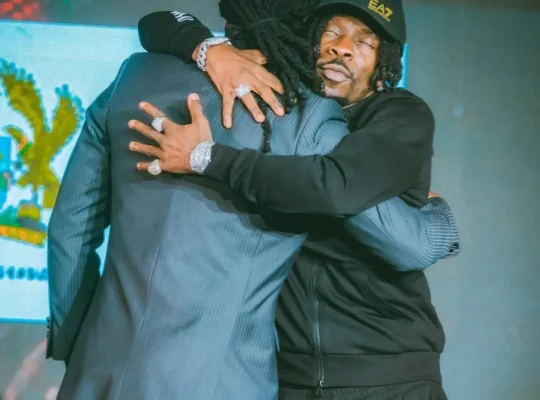
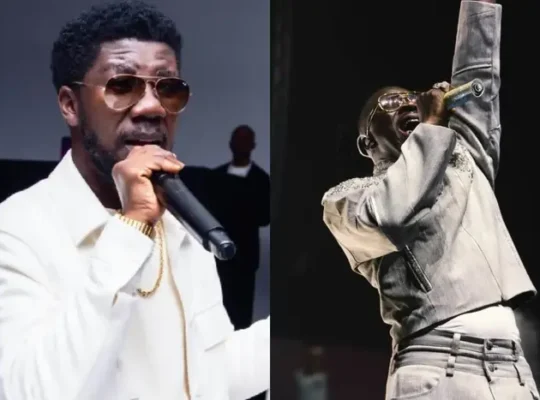
Stonebwoy was also joined on stage by an impressive collection of African musical heavyweights, including Samini, Kwabena Kwabena, Ofori Amponsah, DopeNation, Tiwa Savage and Mr P. Together, they turned BHIM Fest into more than a concert. It became a celebration of African music, influence and excellence.
But this was not about revenge or reopening old battles.
It was about reclamation.
The Independence Arch represented Ghana’s beginnings. The Black Star represented ambition and the heights still ahead. The cowries represented heritage and identity. The ceremonial staff represented leadership and authority.
Put everything together and Stonebwoy’s entrance became a message to the world.
The new generation of Africans is entering rooms their ancestors were once prevented from entering, and they are no longer asking permission to bring their culture along.
Stonebwoy walked through Ghana’s Independence Arch in London, but the symbolism went far beyond one artist, one concert or one city.
Sometimes, independence is not just about knowing where you came from.
It is about having the confidence to take everything that made you who you are and proudly carry it into wherever you are going next.